The Role of PoCUS
PoCUS is a focused imaging modality that can be used as an adjunct to clinical assessment. Rather than replacing clinical assessment, PoCUS complements it by providing additional bedside information that helps clinicians evaluate signs and symptoms, narrow the differential diagnosis, and rapidly answer focused clinical questions [1]. Because PoCUS can be performed wherever patient assessment occurs, it is often integrated directly into routine clinical care by physicians, residents, nurses, and allied health professionals [1].
Unlike comprehensive imaging studies, PoCUS is intentionally focused. PoCUS examinations are designed to answer specific clinical questions using a limited number of targeted views [1]. For example, a clinician may ask: Is there a pericardial effusion? Is there free fluid in the abdomen? Is hydronephrosis present or absent? By focusing on binary or relatively narrow clinical questions, PoCUS can provide rapid bedside information that supports clinical decision-making.
PoCUS offers several advantages as an adjunct to clinical assessment. It provides rapid bedside information that can support earlier diagnosis and management, including reduced time to definitive interventions [2]. Because imaging is performed in real time, findings can be immediately integrated into patient care. PoCUS is also well suited for serial examinations, allowing clinicians to monitor disease progression, treatment response, and ongoing management. Additional advantages include its relatively low cost, its ability to provide procedural guidance, reduction in radiation exposure, and the ability to reduce the need for some invasive diagnostic procedures.
PoCUS and Other Imaging Modalities
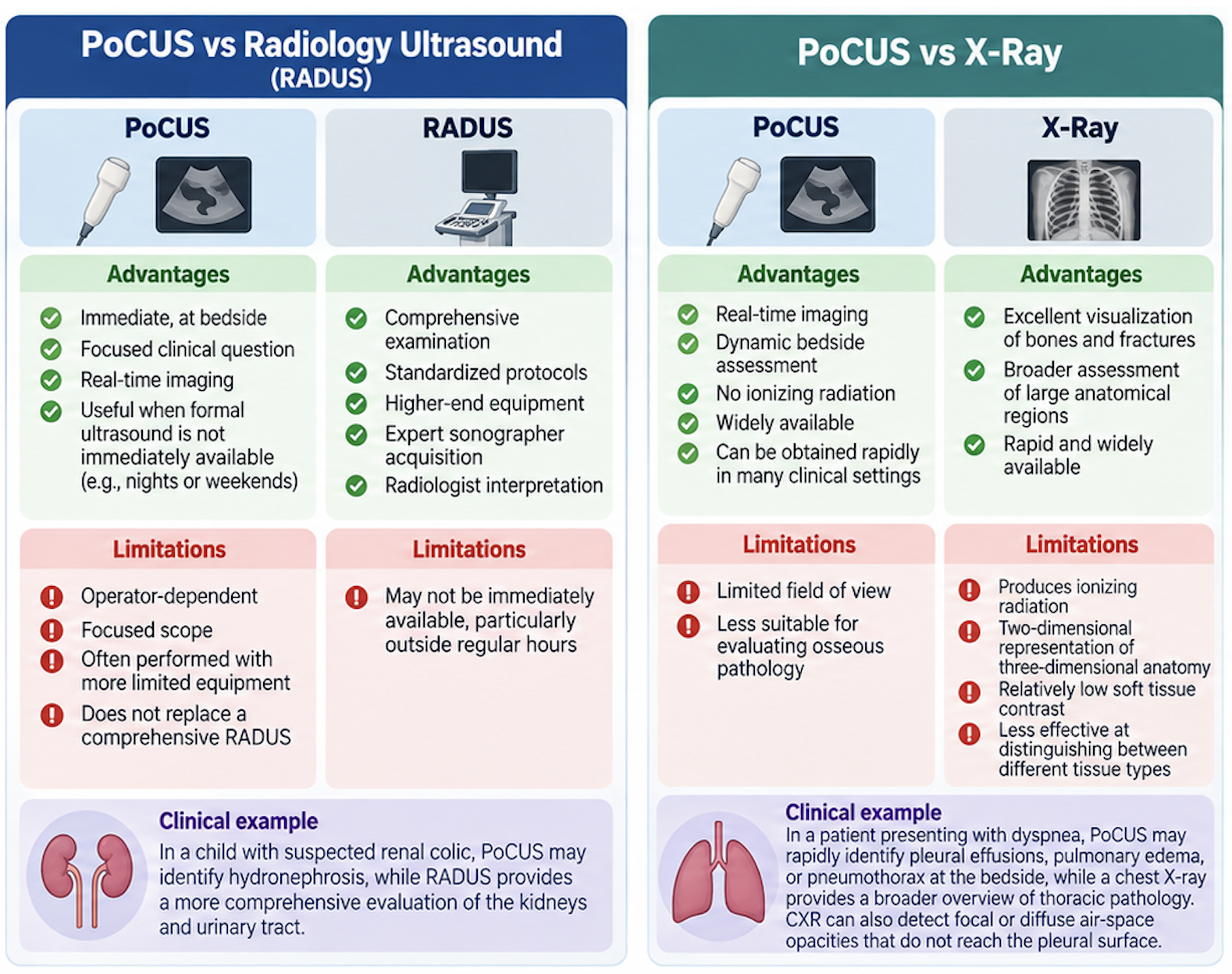
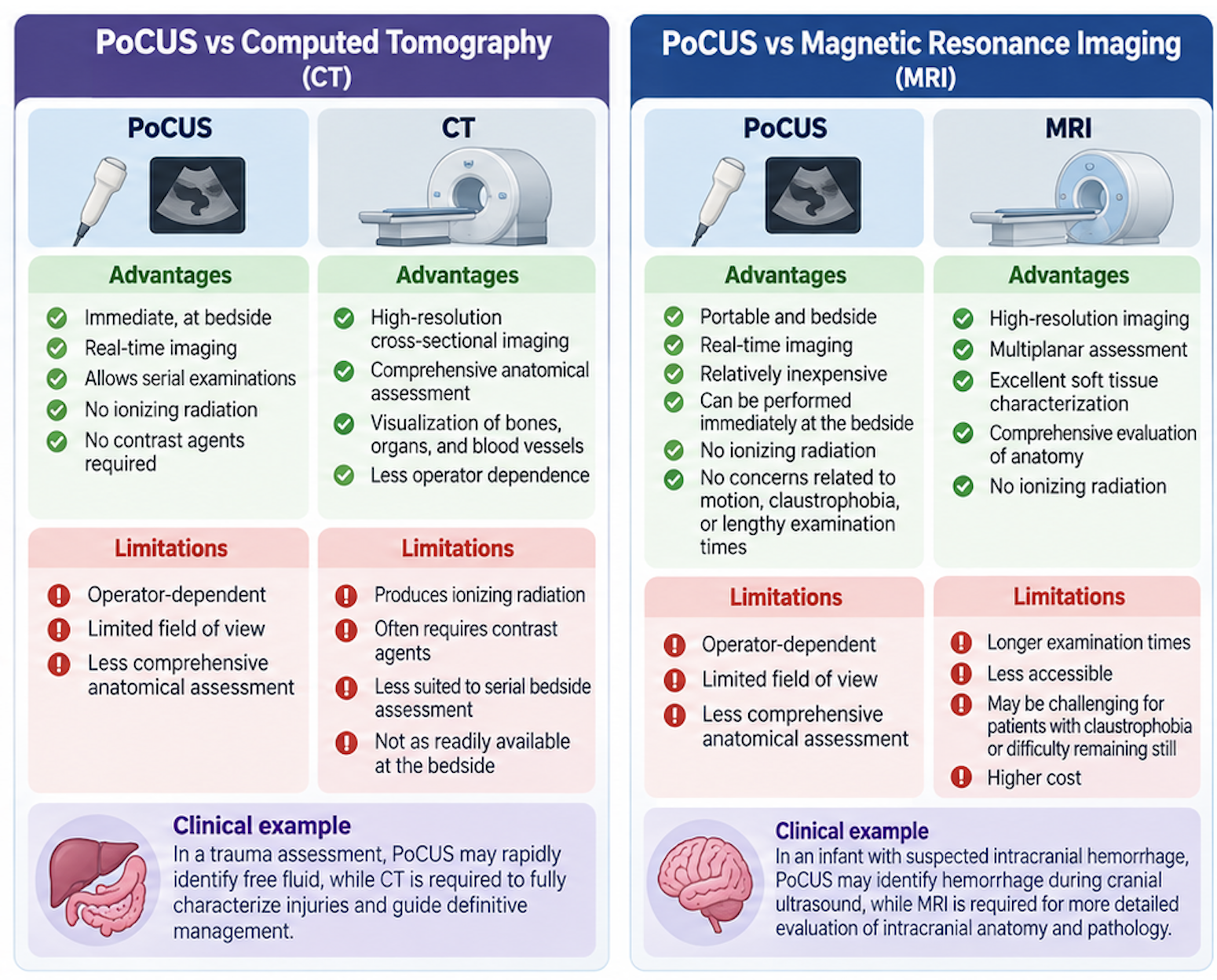
No single imaging modality is ideal for every clinical scenario. PoCUS should be viewed as a complementary tool that provides rapid bedside information, while formal imaging studies typically provide more comprehensive anatomical assessment. Understanding the strengths and limitations of each modality in comparison to PoCUS will help clinicians select the most appropriate investigation for the clinical question being asked.