
Course Description
Certification
This activity is an Accredited Self-Assessment Program (Section 3) as defined by the Maintenance of Certification Program of the Royal College of Physicians and Surgeons of Canada and approved by the University of Calgary Office of Continuing Medical Education and Professional Development (Effective November 1, 2026).
Participants who complete the full learning workflow, including both the theory and applied practice components, may claim a maximum of 13 hours (credits are automatically calculated), allocated as follows:
- Theory component: 3 hours
- Applied practice component: 10 hours
AMA PRA Category 1 Credit
Through an agreement between the Royal College of Physicians and Surgeons of Canada and the American Medical Association, physicians may convert Royal College MOC credits to AMA PRA Category 1 Credits™. More information about converting Royal College MOC credits to AMA credits is available through the AMA Education Hub. Read more about the Royal College agreement with the American Medical Association.
Learning Outcomes
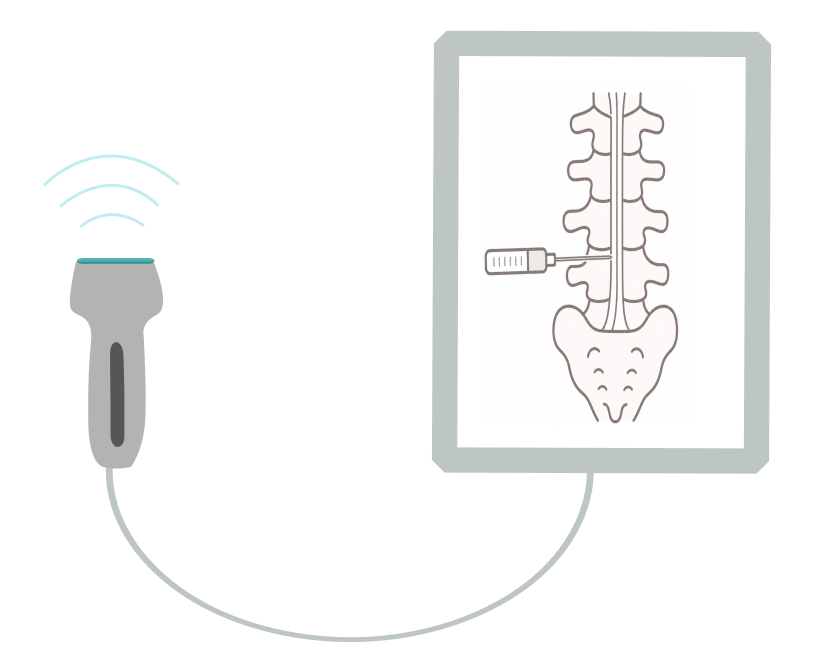
- Describe the indications and limitations of utilizing PoCUS to assist with lumbar punctures in pediatric patients.
- Identify age-specific spinal anatomy and distinguish normal anatomy from findings that may affect lumbar puncture planning.
- Demonstrate the ability to use PoCUS to identify relevant spinal anatomy and determine an appropriate lumbar puncture insertion site.
- Apply PoCUS-guided lumbar puncture landmarking to appropriate pediatric clinical scenarios.
Course Content
- Text-based review
- Instructional video
- Benchmark assessment: Theoretical knowledge
- Log supervised scans (20)
- Benchmark assessment: Image generation
- Benchmark assessment: Image interpretation and clinical application assessment
- Course evaluation
- Certificates of completion (Theory and Applied Practice, issued separately)
Prerequisites
No data is currently available.
Course Curriculum
Total learning: 0 lessons
Time:0 minutes
No Module Assigned
